How can technology be woven throughout the scope and sequence of a course?
Technology is the new opportunity in Education for a frontier of a enhanced learning experience. Before the school year begins, this opportunity can become reality with the proper scope and sequencing of the content and curriculum. Determining, how can technology be effectively integrated into content to help students master standards.
What is scope? Scope can be defined as the required national and state curriculum to be taught in our classrooms.
What is sequence? Sequence is the order in which the content is taught.
Example:
Fourth grade curriculum requires students to understand the water cycle. The essential question of a lesson could be, "what conditions may be necessary for precipitation? As students begin their journey, technology may be used to start students with learning the essential vocabulary words. Such tools as Microsoft PowerPoint, YouTube, or Safari Montage combined with writing can enhance the learning. The lesson will be sequenced to build upon the previous knowledge gained. The final assessment may be to build a PowerPoint on the essential question.
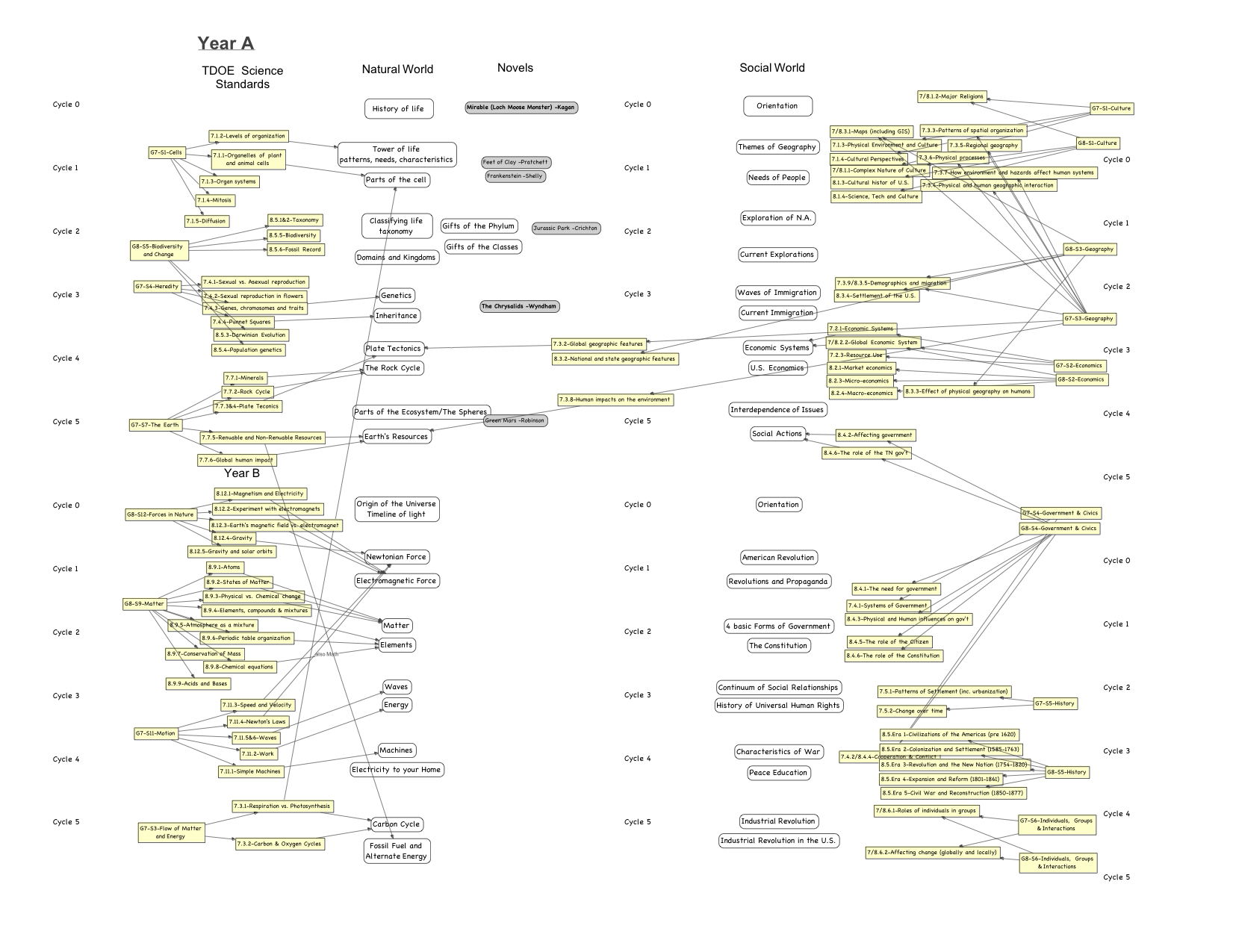
above: scope and sequence example
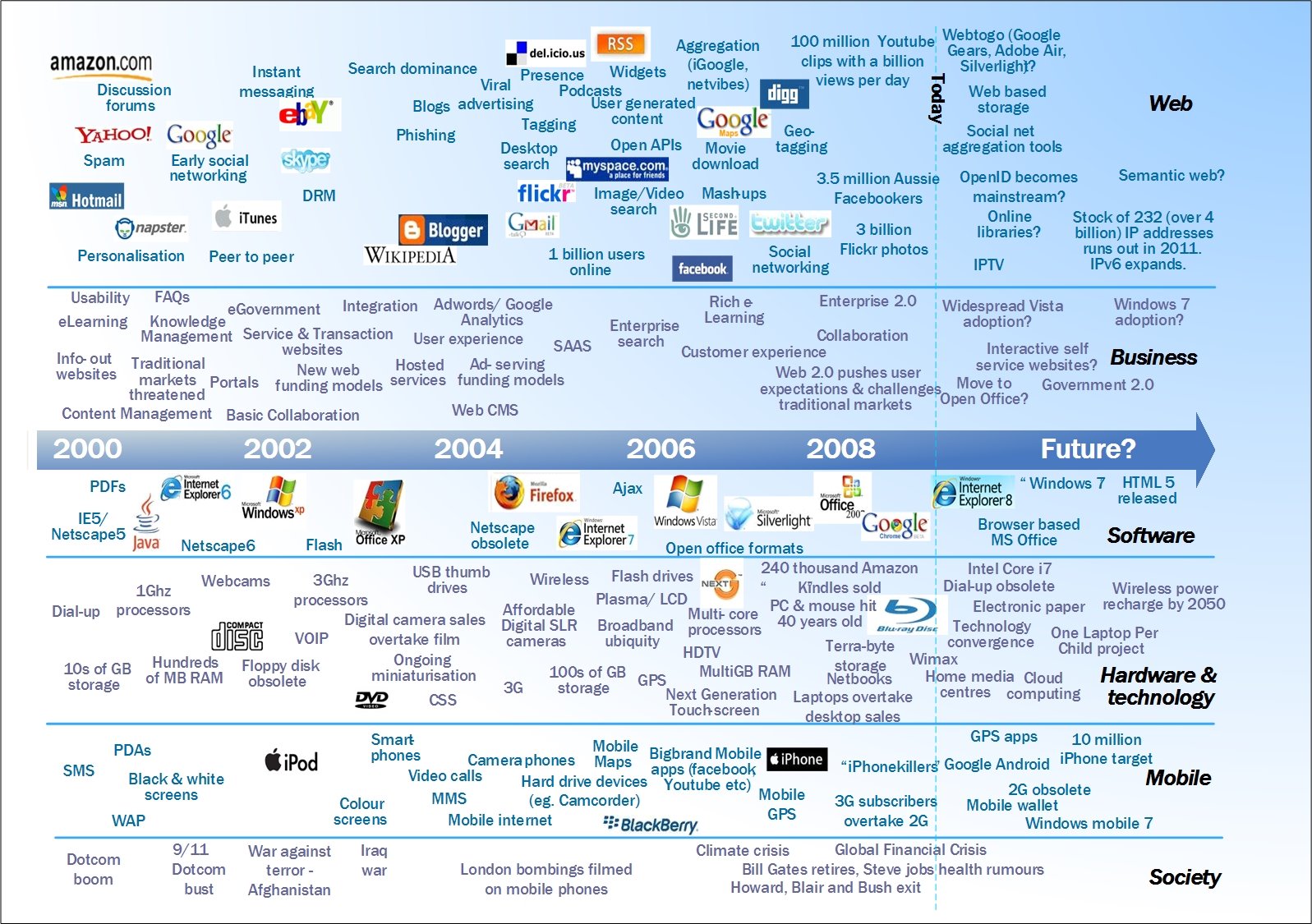
above: technology timeline
How can both general pedagogical and content-specific technologies be utilized effectively throughout a course?

"Technological Pedagogical knowledge is knowledge of the existence, components and capabilities of various technologies as they are used in teaching and learning settings, and conversely, knowing how teaching might change as the result of using particular technologies. This might include an understanding that a range of tools exist for a particular task, the ability to choose a tool based on its fitness, strategies for using the tool’s affordances, and knowledge of pedagogical strategies and the ability to apply those strategies for use of technologies. This would include knowledge of tools for maintaining class records, attendance and grading, as well as knowledge of generic technology-based ideas such as WebQuests, discussion boards and chat rooms." -- Matthew Koehler
Source: http://mkoehler.educ.msu.edu/tpack/technological-pedagogical-knowledge-tpk/
The example above shows a content-specific technology that can be used for teaching air pressure. The tool is a digital barometer. Fourth grade learns about the water cycle and weather. Typically, technology is not available for these lessons. Yet, I think about how important these technologies can be to student's learning when integrated into the content correctly. Student's will be much more engaged in lessons and have effective experience in it.

No comments:
Post a Comment